Publishing & Planning tools
Unifying the NYT Messaging Ecosystem
2025
Redesigning the New York Times email ecosystem meant combining two team's workflows into one platform, and replacing a fragmented, legacy tech stack with a unified experience on top of shared infrastructure. We needed to bridge the gap between editorial's desire for speed and marketing's need for observability into the performance of their objectives. We built a smart, scalable foundation for the entire NYT messaging pipeline.
Our legacy systems were previously siloed and unscalable. Editorial and Marketing operated in different worlds, using jargon-y, non-functioning controls that made it impossible to see a global view of our messaging operations and performance.
The Vision
- Designed for scale:A flexible capability-based development approach to support comprehensive tech decision making and reusability.
- One messaging ecosystem to serve vastly different needsSupporting the rapid-fire pace of our newsroom alongside the data-heavy needs of marketing and transactional business emails.
- Observability at a glance:Unification of workflows and data allowed us to engineer centralized observability and reporting for the entire organization.
A Shared Vocabulary
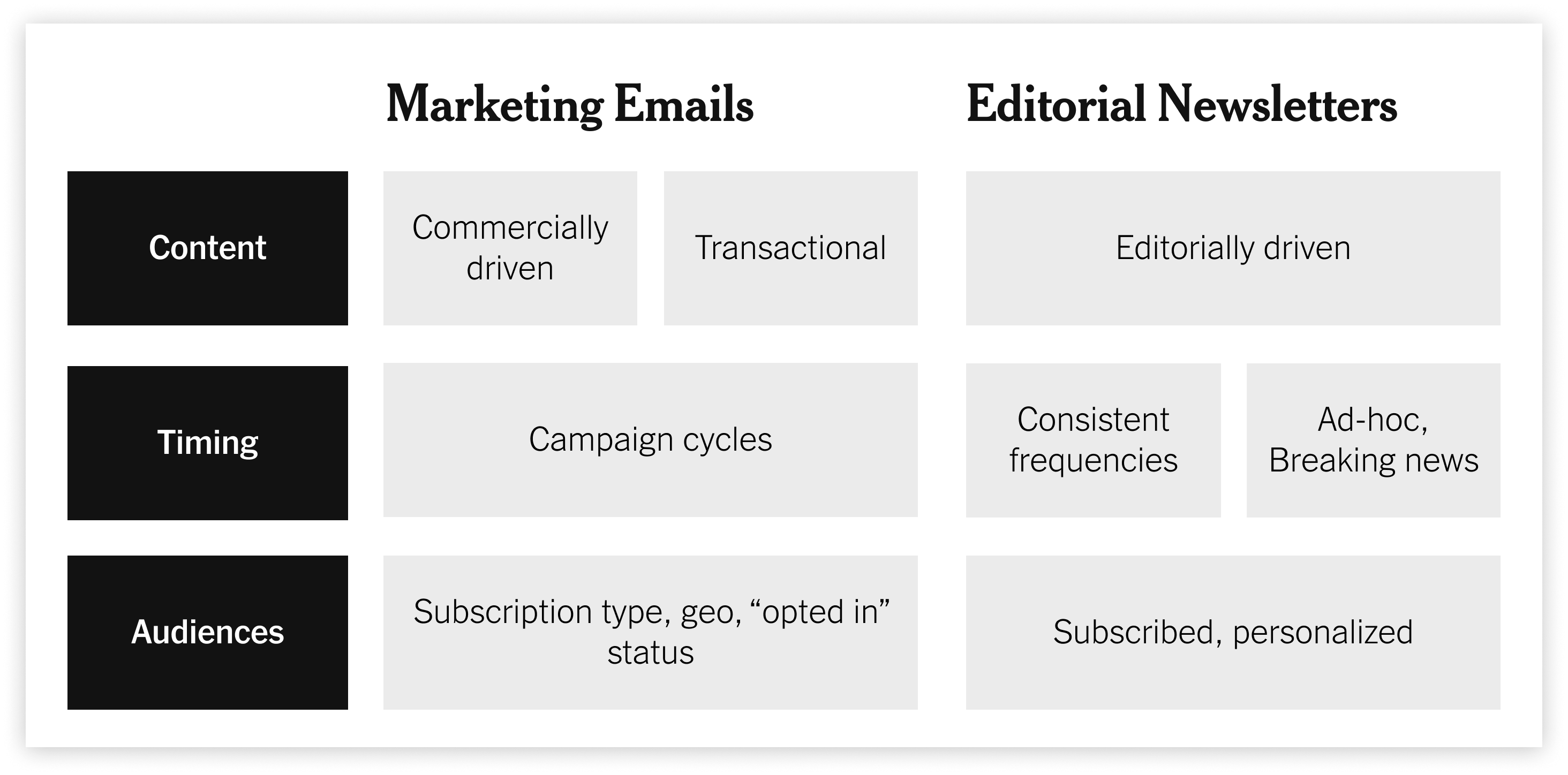
How we aligned the workflows from two distinct teams and platforms under one Information Architecture in the new Email Platform
Through landscape research and word-association workshops, we identified the friction points between how Editorial and Marketing defined "Campaigns" versus "Journeys." We effectively set the boundaries of where we recommended mental models (and tooling) to remain similar to the current state, and where they could start to overlap as we brought two functions into one platform. This looked like:
- Intuitive IA: Standardized terminology that speaks the language of industry veterans while being customized for the Times' unique scale.
- Seamless navigation: A site architecture that allows users to navigate intuitively between planning, execution, and administrative tasks to unblock their workflows.
One Ecosystem, Two Workflows
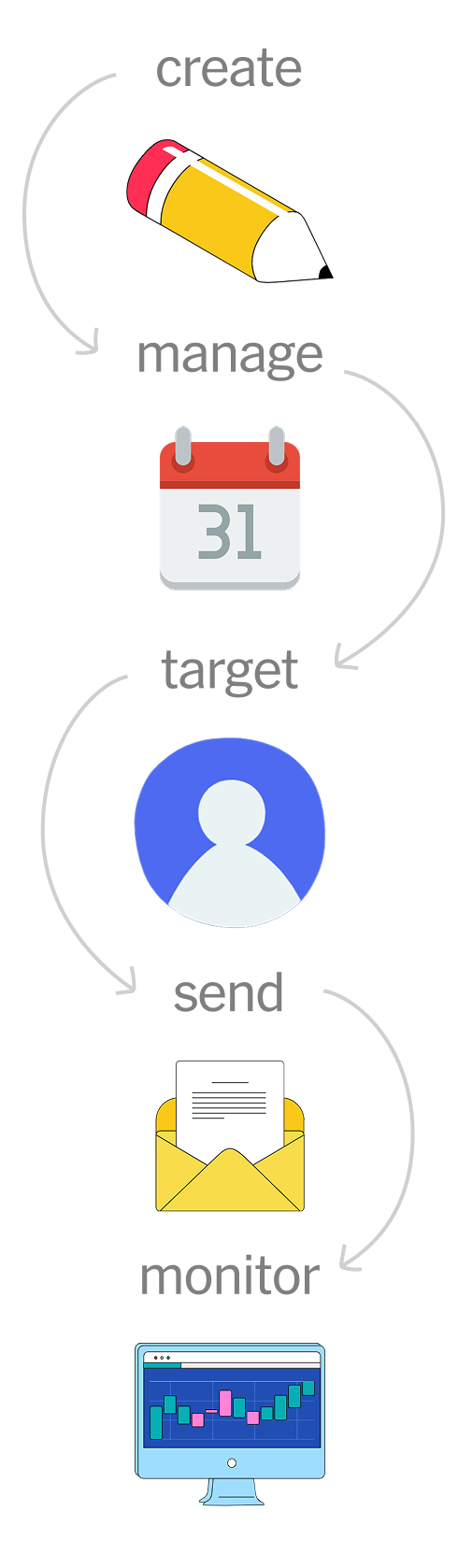
We bridged the gap between editorial's need for speed, marketing's need for journeys, and both teams' needs for advanced capabilities like personalization and experimentation. The new email platform provides a unified interface where disparate teams will be able to manage their email creation, management, and send pipelines with minimal context switching.
Designing for the Future
The transition from two separate platforms to a single hub required a total reimagining of how content flows through various teams in the newsroom and business functions. Success depended on Design being an effective translator between technical constraints and user intent.
- Capability Mapping: We mapped the entire message lifecycle—from draft to when it hits the inbox—to identify where Editorial and Marketing steps overlapped and differed. This allowed us to build core capabilities that serve everyone, with customized capabilities for specific team needs.
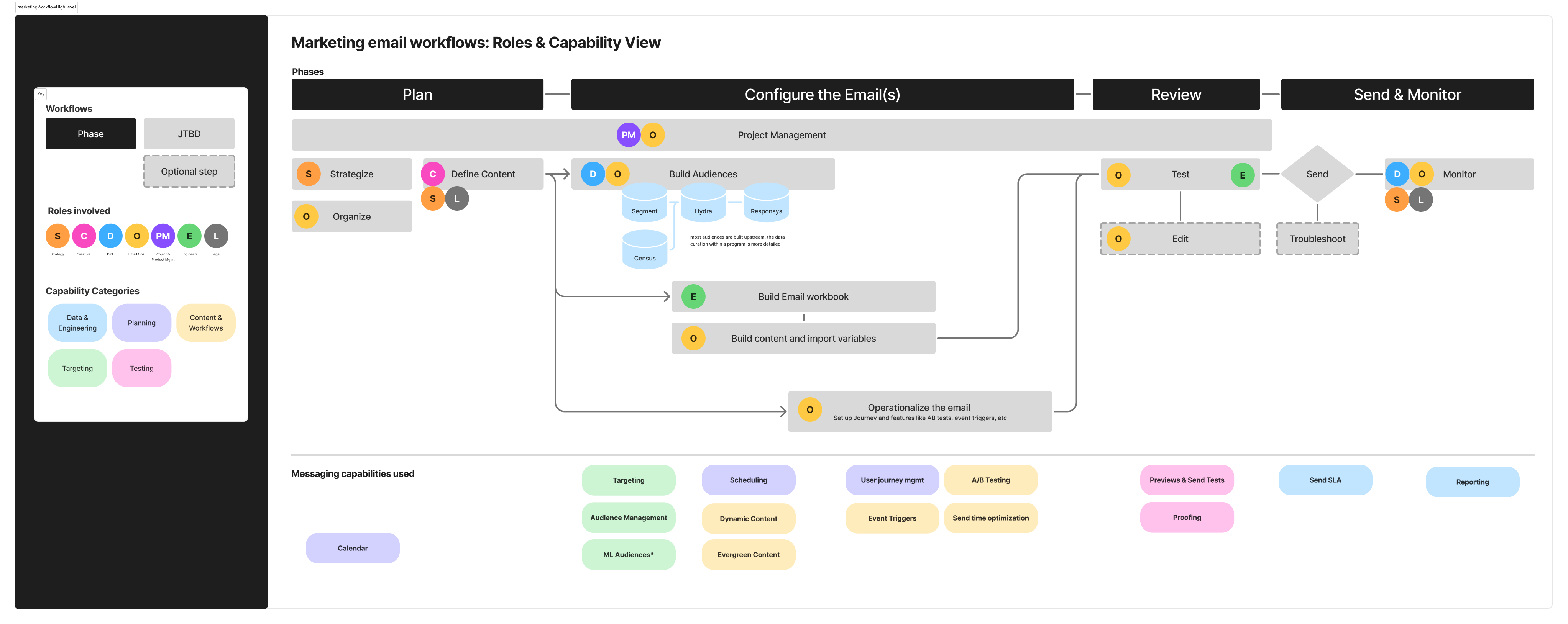
- IA and Navigation: Before designing any specific features, we tested and validated various Information Architecture concepts through sketches, wireframes, and an A/B test workshop to organically understand which concept was most intuitive to our users.
- Design Envisioning: Prototyping the future of how all the capabilities can work together to provide a best in class experience in both V1 and final stages.
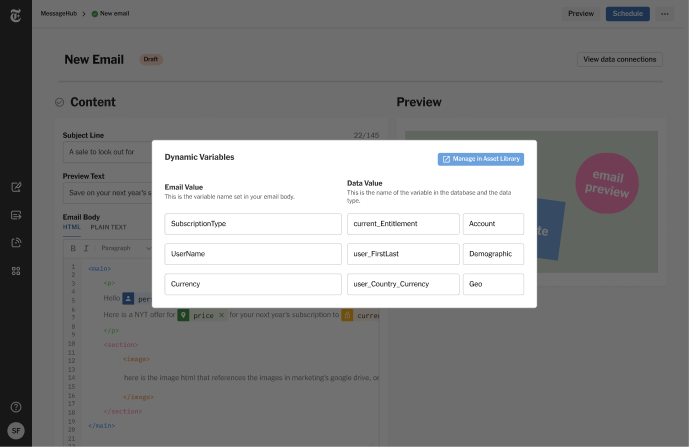
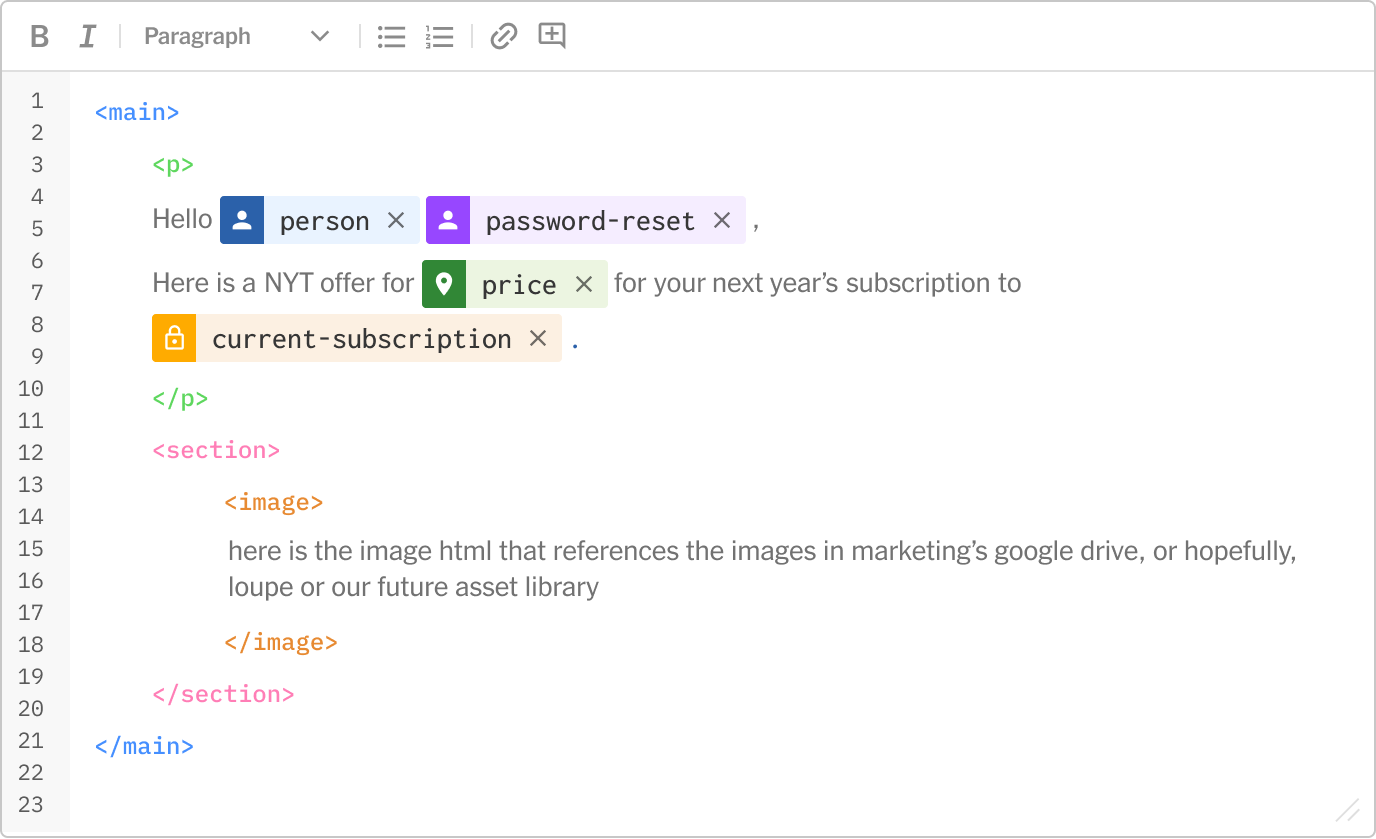
- Shipping the MVP: The recent launch of the MVP unified email platform marked a successful migration of culture and technology. We reduced the technical debt of maintaining dual systems while providing a superior, modern workspace for our internal teams at the Times.
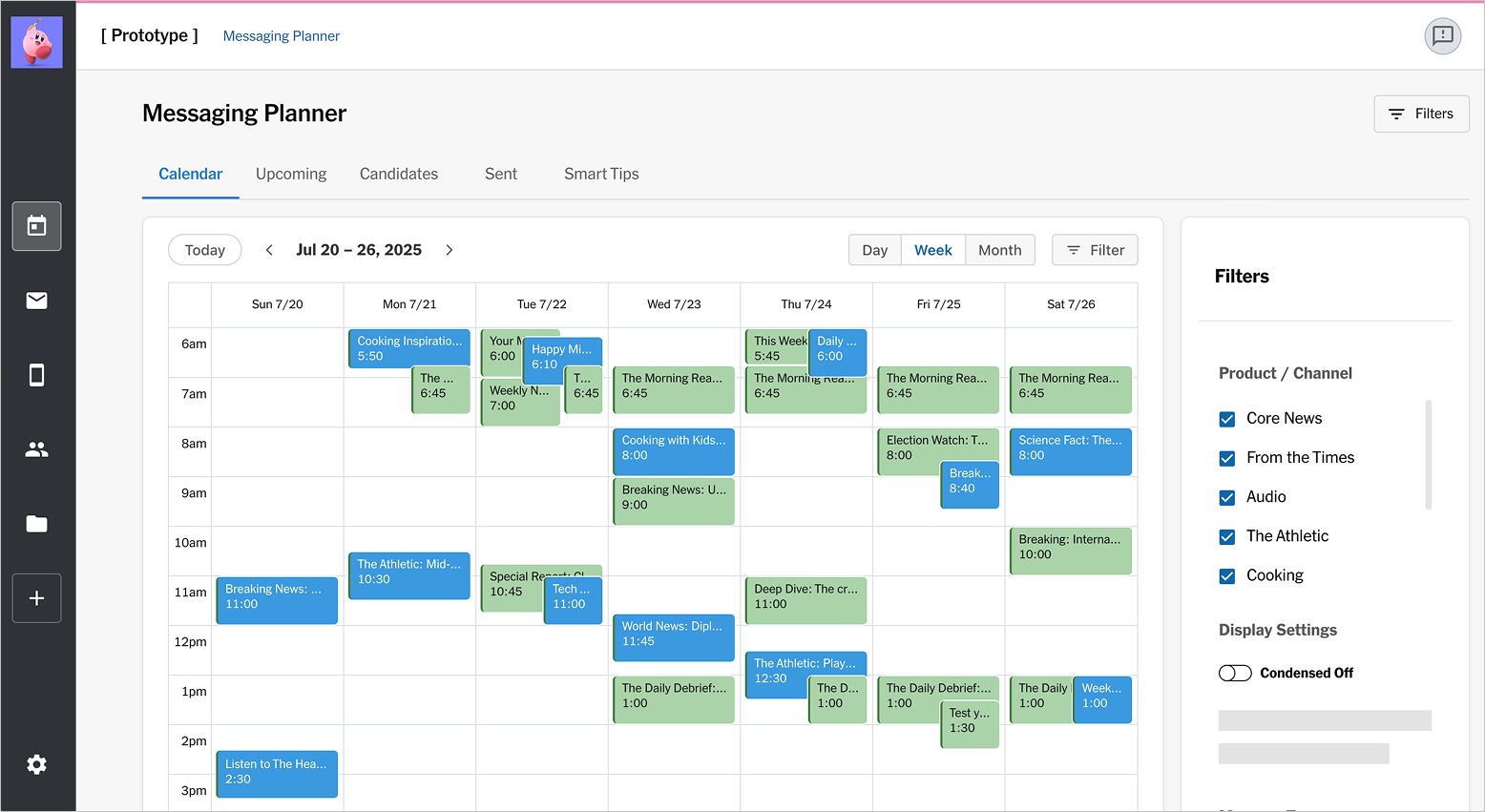
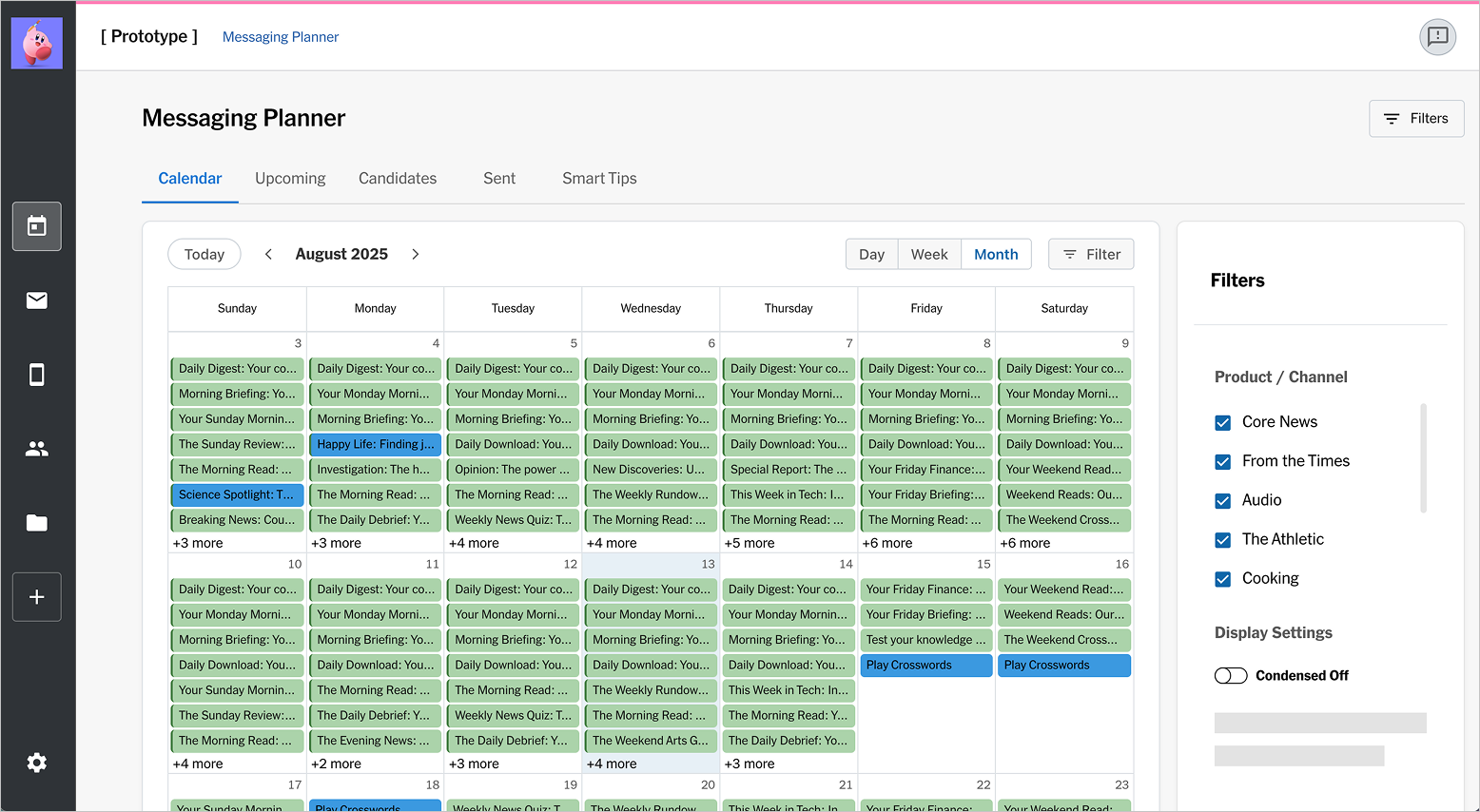
Calendar Envisioning
A platform for newsletter and push alert content planning, scheduling, and recommendations.
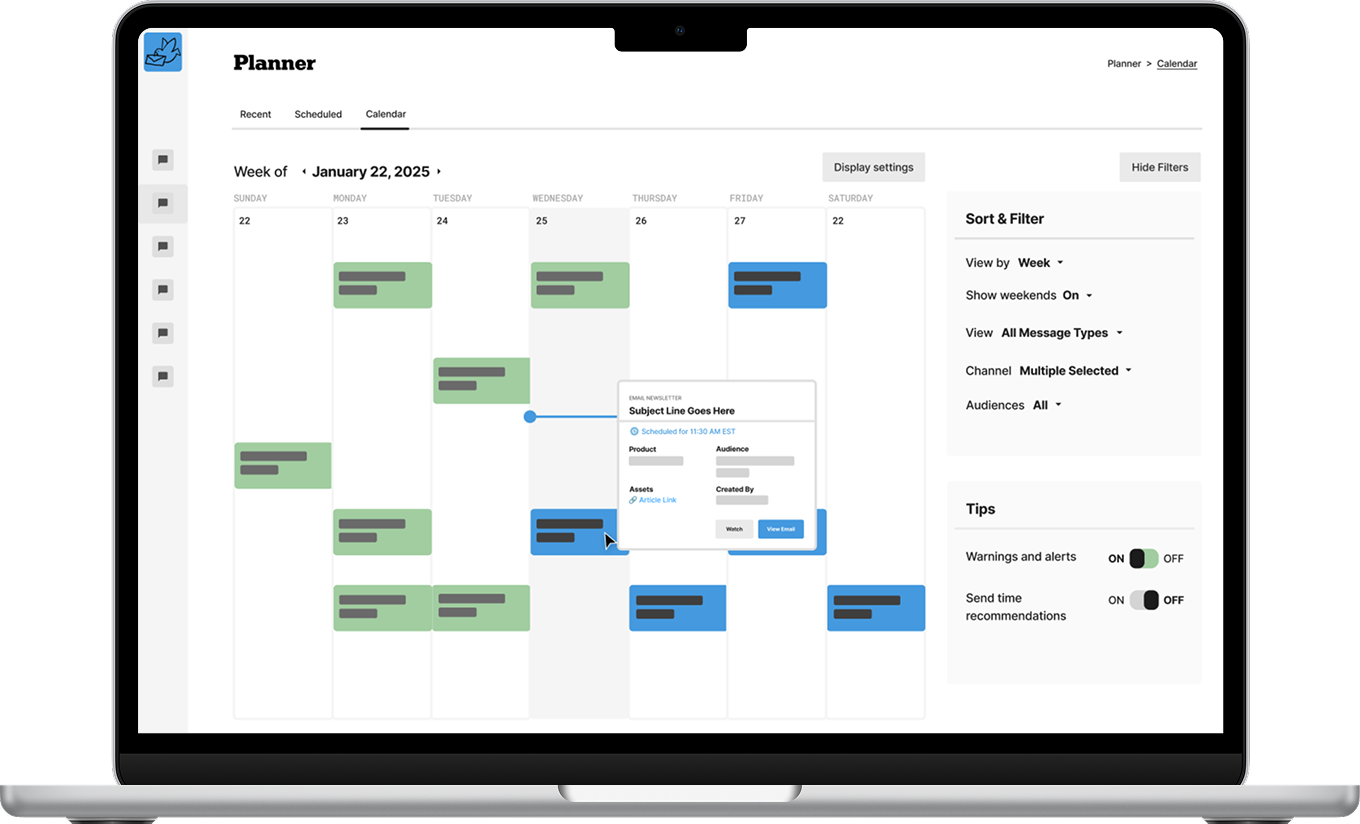
Explorations for a calendar and planning redesign, which evolved into an experiment of new generative design and development tools including Cursor, Figma Make, and V0.